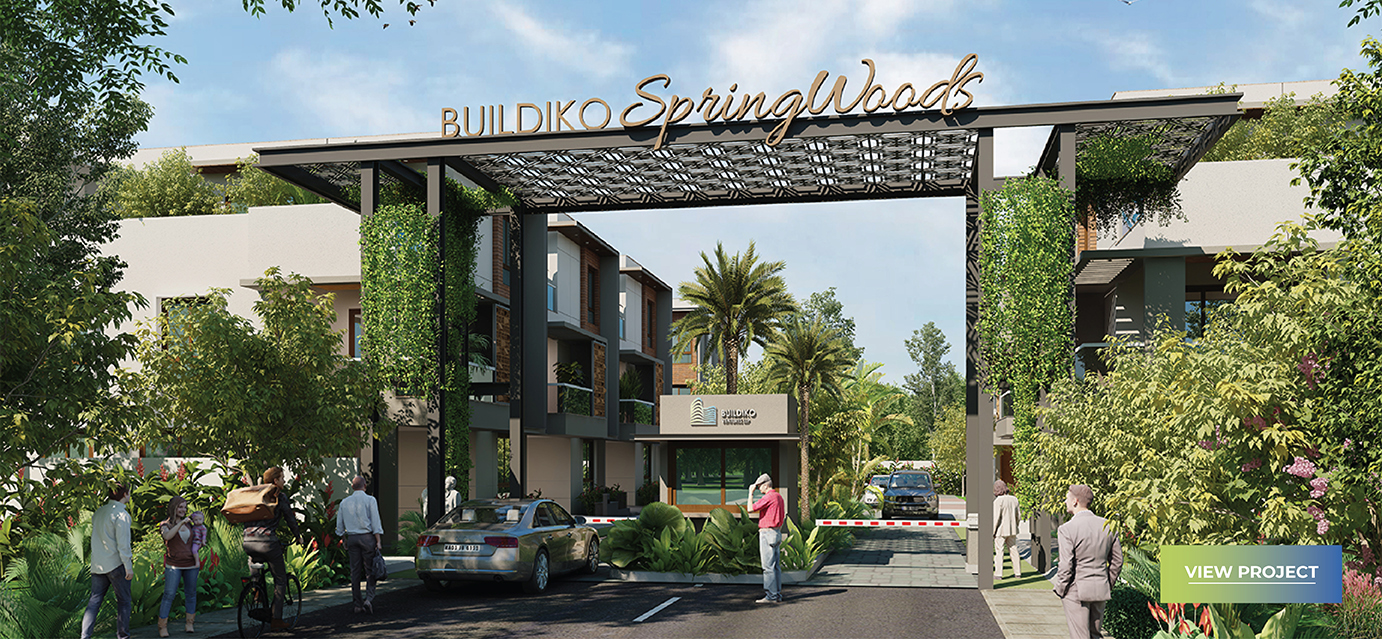

The sales office looks impressive. The scale model is beautifully lit. The brochure promises a lifestyle — not just a home. And the sales executive has been attentive, responsive, and just persuasive enough.
Then comes the line: “If you’d like to block this unit, we just need a booking amount of ₹2–5 lakhs today.”
This is the moment most buyers make their first mistake. The booking amount feels small relative to the total purchase price, so it feels low-stakes. It isn’t. Once you pay, your negotiating leverage drops significantly. The builder now has your money, your emotional investment, and the psychological upper hand.
The questions below are what you ask before that payment — when you still have full leverage, a clear head, and the freedom to walk away without losing anything.
1. Is the Project Registered Under RERA? What Is the RERA Number?
This is not a formality. It is the single most important question you can ask.
RERA registration means the project has been officially declared to Karnataka’s Real Estate Regulatory Authority with a committed possession date, approved layout plans, and financial disclosures. A RERA number means the developer is legally accountable. Without it, they aren’t.
What to do with the answer:
Don’t just accept the RERA number — verify it yourself. Go to rera.karnataka.gov.in, search the project, and confirm:
- The possession date on RERA matches what the salesperson told you
- The project details (number of units, total area) match the brochure
- There are no complaints or show-cause notices against the project
- The promoter’s name matches the entity you’re signing an agreement with
If the salesperson says “RERA registration is in process,” that means it isn’t registered yet. Do not pay a booking amount for an unregistered project — you have no regulatory protection until registration is complete.
2. What Approvals Does the Project Currently Have?
A villa project in Bangalore requires multiple layers of approval before construction can legally begin and before you can legally occupy the home. Most buyers assume that if a project is being sold, all approvals are in place. That assumption is often wrong.
The approvals to ask about specifically:
- Layout approval — from BDA (Bangalore Development Authority) or BBMP, depending on jurisdiction
- Building plan sanction — approval of the specific construction drawings
- Environmental clearance — mandatory for projects above a certain size
- RERA registration — covered above
Ask for copies of these documents. A legitimate developer will have them ready. A developer who says “those are internal documents” or “our legal team handles that” is not being transparent.
The critical follow-up: ask whether approvals are in place for the specific plot and villa you are buying, not just for the overall project. In large phased developments, later phases sometimes get sold before approvals for those phases are obtained.
3. What Is the Exact Possession Date — and What Does “Possession” Mean?
You need two answers here, not one.
First, the date. Get a specific date — not “end of 2027,” not “approximately 30 months from now.” A date. If the developer says they can’t commit to a date, ask why — and note that RERA registration requires a declared possession date. If they’re RERA registered and still won’t give you a date, something is off.
Second, the definition. Ask explicitly: “When you say possession, do you mean handing over keys, or do you mean handing over keys along with the Occupancy Certificate?”
These are very different things. Handing over keys means physical access to the unit. Occupancy Certificate (OC) means the local authority has inspected the construction, confirmed it matches the approved plan, and certified it as legally fit for occupation. Without OC, you cannot legally live there, cannot get Khata in your name, and will face serious difficulty reselling.
A good developer will tie possession to OC. If they separate the two — “we’ll give you possession now and OC will come in a few months” — treat that as a yellow flag and probe further.
4. What Is the Payment Schedule, and What Triggers Each Payment?
Payment schedules in villa projects typically follow one of two structures: construction-linked or time-linked.
Construction-linked means you pay when specific milestones are reached — foundation complete, plinth level, roof slab, and so on. This is the buyer-friendly model — you pay as physical progress happens, which means the builder has an incentive to build.
Time-linked means you pay on specific calendar dates regardless of construction progress. This is the builder-friendly model — you pay even if the site has been idle.
Ask for the full payment schedule in writing and understand exactly what triggers each tranche. Then ask: “What happens if the construction milestone isn’t reached by the time a payment is due? Do I still have to pay?”
Also ask about the final payment — typically 5–10% of the total. Good practice is to tie this payment to OC and actual possession, not just a notice from the builder saying the unit is ready.
5. What Exactly Is Included in the Price — and What Will I Be Charged Extra?
The brochure price is rarely the final price. What you see advertised is typically the base sale price per sq.ft multiplied by the super built-up area. By the time you reach registration, the actual amount you pay can be 15–25% higher.
Ask for a complete cost sheet that includes:
- GST — currently 5% for under-construction properties (no GST on ready-to-move with OC)
- Stamp duty and registration — 5–6% in Karnataka, paid to the government
- Khata transfer charges
- Car parking — often charged separately, ₹3–8 lakh per slot
- Club membership — sometimes mandatory, ₹1–3 lakh
- Maintenance deposit — corpus fund collected upfront, ₹2–5 lakh
- Power backup and utility connection charges
- Any other “amenity charges” or “infrastructure development charges”
Get this list in writing. Compare it to the cost sheet of other projects you’re evaluating. And be wary of a developer who is reluctant to provide a full cost sheet upfront — that reluctance usually means there are charges they’d rather reveal after you’ve paid the booking amount.
6. What Are the Exact Specifications — Brand, Grade, and Material?
“Premium specifications” and “luxury finishes” mean nothing legally. What matters is what’s written in the agreement’s specification schedule.
Before you book, ask for the full specifications document, which should list:
- Flooring: brand, thickness, finish (e.g., Kajaria/RAK/Somany, 800x800mm, double-charged vitrified)
- Kitchen: platform material, sink brand, chimney and hob brand if included
- Bathrooms: sanitary ware brand, CP fittings brand, tile specifications
- Doors: material, brand, dimensions (main door vs internal doors)
- Electrical: wiring brand, switch brand, number of points per room
- Structure: RCC frame type, ceiling height
Then ask: “Is this specification document going to be made part of the builder-buyer agreement as a signed annexure?”
If the specifications aren’t in the agreement, they are promises — not commitments. Builders have substituted materials after booking. Having it in the agreement gives you contractual recourse.
7. What Is the Developer’s Track Record — Specifically on Delivery?
Every developer will tell you they have a strong track record. What you need is verification, not assurance.
Ask for a list of completed projects — project name, location, promised possession date, and actual possession date. Then independently verify this information.
How to verify:
- Search the project on Karnataka RERA — completed projects show their actual completion date
- Visit completed communities and speak to residents directly (ask the developer for the community’s name; if they’re reluctant to share, that’s telling)
- Search for the developer’s name along with “delay” or “complaint” or “RERA notice” on Google
- Check the RERA complaint portal for any cases filed against the promoter
A developer with a consistent history of 12–18 month delays on past projects is not going to suddenly deliver on time for yours. Past behaviour is your best predictor.
8. Who Actually Owns the Land — and Is the Title Clean?
This question makes developers uncomfortable, which is exactly why you should ask it.
In Bangalore’s villa market, several structures are common:
- Developer owns the land outright (cleanest scenario)
- Developer has a joint development agreement (JDA) with the landowner — the landowner contributes land, the developer builds and shares units
- Developer has entered into a development agreement with multiple small landowners whose titles may individually have issues
Each structure has different risk profiles. In a JDA, for example, if the landowner and developer have a falling out mid-construction, your unit can get legally entangled in their dispute.
Ask specifically:
- Who holds title to the land?
- Is there a JDA involved? If so, can you see the key terms?
- Has a title search been conducted by an independent lawyer?
- Is there an Encumbrance Certificate (EC) for the land showing it is free of any mortgages or legal claims?
A developer who says “our legal team has verified the title” is not giving you independent assurance. You want the actual documents — or at minimum, the ability to have your own lawyer review them before you commit.
9. What Happens If I Need to Cancel — What Are the Exact Terms?
Life changes. Job relocations happen. Loan sanctions fall through. Medical emergencies occur. Before you pay a booking amount, you need to know exactly what it will cost you to exit.
Ask for the cancellation policy in writing. Key things to clarify:
- What percentage is forfeited on cancellation?
- Is the booking amount fully forfeited, or does a portion apply toward the forfeiture calculation?
- Within what timeframe will the refund be processed?
- What happens to the GST you’ve paid — does the developer facilitate a GST refund?
- Is there any window after signing (a “cooling-off period”) during which you can cancel without penalty?
As mentioned in the context of builder-buyer agreements, RERA-aligned practice is a forfeiture of around 2–5% of the agreement value, not 20%. If a developer quotes 20% forfeiture upfront, negotiate before booking — not after.
Also ask the reverse: “Under what circumstances can the developer cancel my booking, and what do I receive in that case?” The answer to this question reveals a lot about how equitable the relationship is designed to be.
10. When Will the Sale Agreement Be Registered — and Can I See a Draft First?
There are two documents in a typical villa purchase: the builder-buyer agreement (BBA) and the final sale deed. The BBA is signed early in the process; the sale deed is registered at the time of possession.
Many buyers sign the BBA without reading it — or worse, without even seeing it before they pay the booking amount.
Ask the developer: “Can I get a draft copy of the builder-buyer agreement before I pay the booking amount?”
Any developer who says no — or who says the agreement will only be shared after booking — is structuring the process so that you’re financially committed before you’ve seen your legal obligations. This is a red flag.
When you do get the draft, pay particular attention to:
- Possession date and penalty for delay
- Cancellation and refund terms
- OC clause (is possession tied to OC?)
- Specification schedule as a signed annexure
- Maintenance and corpus fund obligations
- Dispute resolution clause and jurisdiction
Ideally, have an independent property lawyer review the draft before you sign anything or pay anything.
How to Use These Questions
You don’t need to interrogate the sales executive like it’s a deposition. These questions can be asked conversationally, over one or two meetings. The goal is not to seem difficult — it’s to get answers, in writing, before your money is involved.
A note on responses: pay as much attention to how a developer answers as to what they answer. A developer who is transparent, who has documents ready, who answers specifically rather than vaguely, and who doesn’t rush you — that developer is telling you something important about how they will treat you as a buyer over the next 2–3 years of construction.
A developer who deflects, who tells you “don’t worry, our legal team handles everything,” who creates urgency to sign today, who can’t produce basic documents — that developer is also telling you something important.
The booking amount is not just a financial transaction. It is the first test of the developer’s character. Pay attention to what you see.
Quick Reference: The 10 Questions at a Glance – click here to download the resource
This article is for informational purposes only and does not constitute legal advice. Always consult a qualified property lawyer before signing any real estate agreement or making any payment.